
Why I Stopped Negotiating With Myself Every Morning
What does a 1972 NYC subway map have to do with your morning routine? Discover why fewer choices lead to better work.


I wake up at 4:30 AM most days to the vibration of my Apple Watch. I don’t get up that early because I enjoy it, but because it’s when I have the most control and the least is expected of me.
My first movements are mechanical: I fill up my water bottles, take my supplements and feed my dog, Archie, who appears out of the dark hallway like clockwork every morning, looking baffled as to why his breakfast is yet to be served.
Next, I head to my office, close the door and begin my writing routine. I start with my Morning Pages. There is no deliberation in the process. It’s just the first step in the sequence.
By 5:00 AM, I have finished journaling, made myself an espresso and have brown noise playing through my headphones to help me focus by drowning out the world. Then I sit in my dimly lit room and stare at a blank document as I start my writing session.
The routine replaces willpower
This routine isn’t about willpower. It’s about recognising that the routine has to be the boss.
When I stepped away from my previous job, I thought the freedom of creating my own schedule would feel energising. It did at first. Back then, I only had one goal: keep the business running. It was a simple, singular focus.
But now that I’ve made creativity a primary pillar of my life, that freedom has started to feel slippery—like walking on a wet floor that hasn’t dried yet.
Suddenly, I wasn’t just an entrepreneur. I was a writer, too. These two versions of me are constantly at war for the same mental bandwidth.
When you work for yourself, there is no boss to check your clock-in time. No performance review to worry about if you choose to stay under the covers for another hour. Without some external accountability, everything feels optional.
This is where the context-switching starts to take over: I find myself trying to write while thinking about work, or managing the business while feeling guilty for not writing.
To end this cycle, I had to reclaim some control. I built a routine I could trust because I got tired of negotiating with myself every morning about whether I should:
- Start now or in ten minutes?
- Write first or check messages?
- Push through or wait until I feel more focused?
I took those decisions out of my hands and set up a simple four-hour deep-work block to start each day. This is foundational work. It must be completed when I’m the most alert and creative.
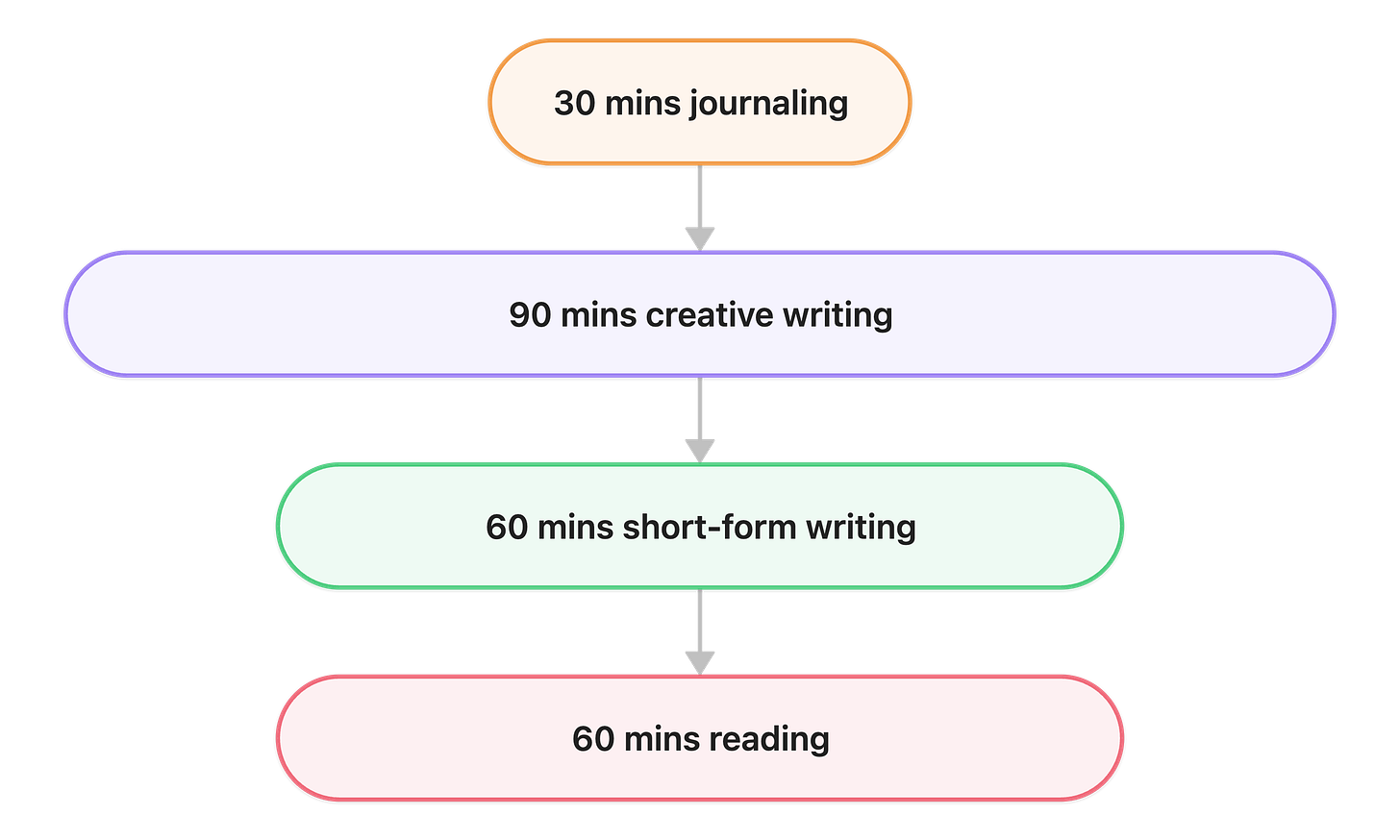
Along with the coffee and brown noise, I keep a visible timer going on my monitor. The countdown isn’t designed to rush me; it’s there to provide a sense of safety. It tells me that for this specific window of time, I don’t have to worry about the business or the bills.
But even with the time carved out, the mental clutter can still muddy the waters. Just creating a routine wasn’t enough; I needed to protect my focus from the invisible friction that was still leaking into my morning. That means maintaining a set of rules that don’t waver when I’m tired, distracted, or delayed.
Clarity through constraint
Massimo Vignelli, the legendary Italian designer, viewed visual clutter as a sign of a cluttered mind. Most famously, he redesigned the 1972 New York City Subway map, turning a chaotic mess of tunnels into a clean, logical grid.
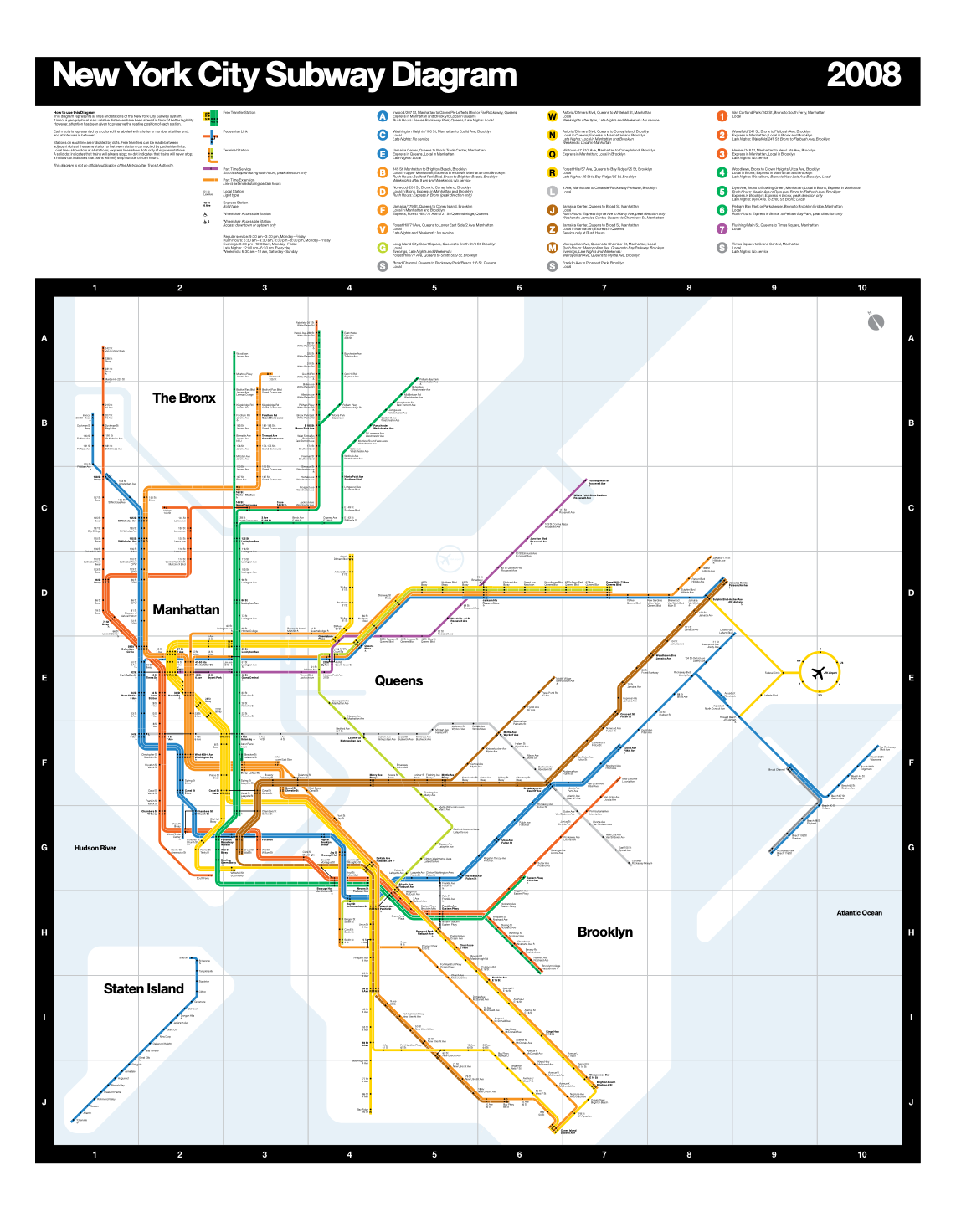
Vignelli didn’t believe in creative whims. He followed a strict “Canon” for his graphic design work that only used a few specific typefaces and relied on mathematical ratios to create order.
By standardising the elements—the placement, the spacing, the rules—he removed hundreds of tiny decisions that typically drain mental energy and slow things down.
His grids weren’t there to impress anyone. They were there for clarity.
I realised my mornings needed the same thing: fewer choices and clearer rules. A routine that didn’t rely on how I felt that day. Because once I let the small, invisible things get sloppy, my focus follows.
This isn’t really about waking up early. It’s about having a foolproof way to work without introducing decision fatigue.
But even the most perfect grid or routine is just a skeleton.
Without a reason to care, the structure starts to feel hollow, and a cynical voice eventually creeps in:
- “Who cares?”
- “Why bother?”
- “What is this even for?”
The routine can tell you what to do, but it can’t tell you why you should do it well, especially when no one is watching.
Vignelli’s grid provides the architecture for how I can work, but I still need a way to find devotion to the process itself.
Devotion without an audience
I found that in a character named Hirayama from the film Perfect Days. He spends his days cleaning public toilets in Tokyo.

He has no audience or fancy title, yet he approaches his work with the focus of a monk and the precision of a surgeon—even going as far as using a small mirror to check under the rims of the toilets. It’s a level of detail no one asked for, and no one will ever notice.
His devotion to routine naturally carries over into his free time: stowing away his futon, watering his plants, and reading quietly under a lamp before bed.
Those details stayed with me because they’re insignificant to everyone else, yet they matter deeply to him.
Watching Hirayama didn’t make me want his job. It made me want his contentment. He finds beauty in ordinary tasks because he chooses to treat them with care and view them with gratitude.
I’m learning that my own growth and happiness don’t come from breakthroughs alone, but from returning to the small, repeated actions built into my routine.
The structure serves a purpose that goes far beyond my output. It brings me joy. It silences the cynical voice because:
- I care.
- The work is worth the bother.
- I’m doing it for the person I’m becoming.
Because even if my skills never improved, I would still find satisfaction in the repetition.
My alarm is already set for 4:30 AM. There will be a dog to feed, a coffee to make and words to type. But there will be no decisions left to negotiate.
I just need to keep checking the mirrors, trusting the process, and enjoying the routine.


Discussion